

Avocado has become one of the most in-demand fruits worldwide, both for its nutritional value and its commercial versatility. However, achieving stable, high-quality production is not a matter of chance.
Avocado cultivation under optimal conditions requires a balanced combination of climate, soil, water management and agronomic practices adapted to each stage of the tree’s development.
Climate, light and temperature
The avocado tree, native to tropical and subtropical regions, thrives in warm, sub-humid environments. Mild and stable temperatures favour vegetative growth and productivity. Although some varieties can tolerate occasional drops in temperature, frost has a negative impact on flowering and fruit set.
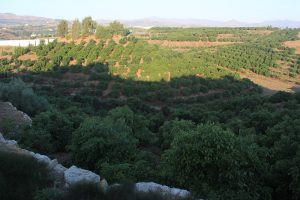
In addition, avocado trees require between six and eight hours of sunlight per day to maintain efficient photosynthesis. It is essential that climatic conditions support this level of exposure. In the Salsa Agrícola plantations on the Eastern Costa del Sol, the local microclimate contributes significantly to the healthy development of avocado crops.
Water management and environmental humidity
Water management is a key aspect of avocado cultivation, making precise irrigation management essential to maintain soil balance and ensure proper tree development. It is important to avoid both water stress and excessive moisture, as waterlogging can encourage the appearance of root diseases.
On Salsa Agrícola farms, irrigation is managed using data collected through soil moisture probes and proprietary weather stations that record variables such as rainfall, solar radiation, wind and environmental humidity. This information allows irrigation to be precisely adjusted according to the real conditions of the crop.
In addition, probes are used to measure the electrical conductivity of the water, as avocado trees are particularly sensitive to salinity. These systems are complemented by specific irrigation sensors that help prevent unnecessary water loss and ensure that water resources are used as efficiently as possible by the crop.
Environmental humidity also influences avocado development. An appropriate balance promotes healthy tree growth and fruit quality. For this reason, Salsa Agrícola farms continuously monitor soil and environmental conditions in order to optimise crop management.
Soil and nutrition
Avocado trees can adapt to different types of soil as long as they offer good drainage. Highly saline or waterlogged soils limit their development. The ideal pH ranges between 5 and 7, with slightly acidic soils being particularly favourable.
Organic matter is essential for soil structure. The incorporation of compost and manure improves aeration and promotes a stronger root system. This is the approach followed on Salsa Agrícola farms, where improved annual organic matter levels are monitored through regular soil analyses.
Planting, management and maintenance
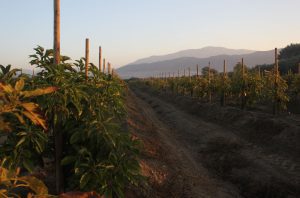
Proper crop establishment is crucial for success. Land preparation, soil analysis and appropriate planting distances allow the trees to develop without competition for resources. On Salsa Agrícola farms, advanced techniques are used to control water consumption and reduce fertiliser use.
Pruning aimed at improving ventilation, together with continuous monitoring of soil conditions, is essential to ensure sustainable production. In Salsa Agrícola’s intensive plantations, maximum production can be achieved in a shorter time, reaching yields comparable to traditional plantations in just three years.
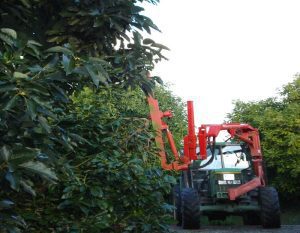
Pruning is an essential practice in avocado management, as it helps balance tree growth and production. It improves light penetration and air circulation within the canopy, favouring flowering and fruit quality. It also facilitates harvesting and plantation management, helping maintain productivity and tree health over time.
Monitoring soil conditions is fundamental in avocado cultivation, as the health of the root system largely determines productivity. Because avocado trees are sensitive to drainage problems, salinity and nutritional imbalances, soil conditions must be regularly checked. This monitoring allows irrigation, fertilisation and crop management to be adjusted, creating an optimal environment for root development and ensuring stable production.