

Local agriculture is a form of production closely linked to the local area. The proximity between growing regions and destination markets reduces transport times, improves traceability, and makes it possible to offer products whose origin can be easily identified.
However, local agriculture is not just a matter of distance. Behind every crop lies careful planning, in-depth knowledge of the land, and constant adaptation to the conditions of each farm. This is where its value lies: in recognising the importance of local agricultural activity and highlighting the entire process behind a quality product.
The quality of an agricultural product begins long before harvesting. It depends on the climate, soil conditions, water availability, crop nutrition, and the monitoring carried out at every stage of its development.
In addition to all these factors, the distance between the place of production and the market also plays a role. When transport times are shorter, harvesting can be better planned according to the condition of the fruit and market requirements.
This proximity is particularly important for crops where the timing of the harvest directly influences flavour, aroma, texture, or firmness.
Producing locally also facilitates coordination between cultivation, harvesting, selection, and delivery teams. Shortening the time between these stages helps prevent losses, damage, and deterioration, while better preserving the product’s qualities.
A recognisable origin builds trust
Origin is an increasingly important factor in agricultural production. Consumers no longer focus solely on the appearance or taste of a product; they also want to know where it was grown and what processes were followed to produce it.
Traceability makes it possible to follow the product’s journey from the farm to the market, identifying the conditions in which it was grown and the agronomic decisions made throughout the cultivation process.
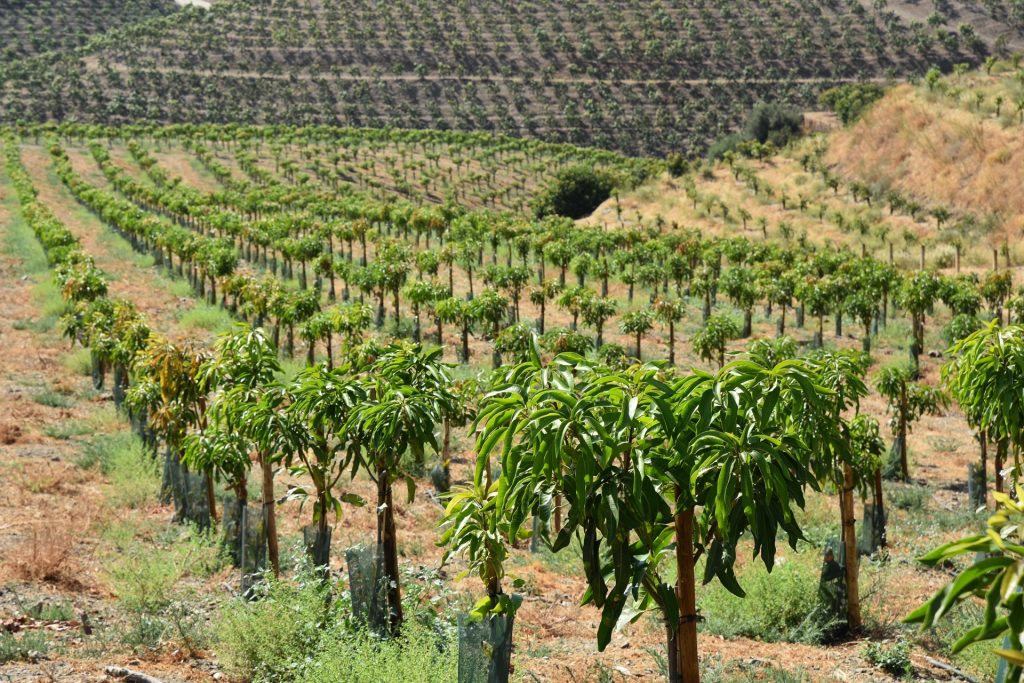
Local agriculture creates a more direct connection between the product and the region. This connection highlights the agricultural expertise of an area, its climatic characteristics, and the knowledge accumulated by the professionals who work there.
For this reason, origin should not be understood merely as a geographical indication: it is part of the product’s identity and the quality perceived by the consumer.
Axarquía mangoes: a crop with its own identity
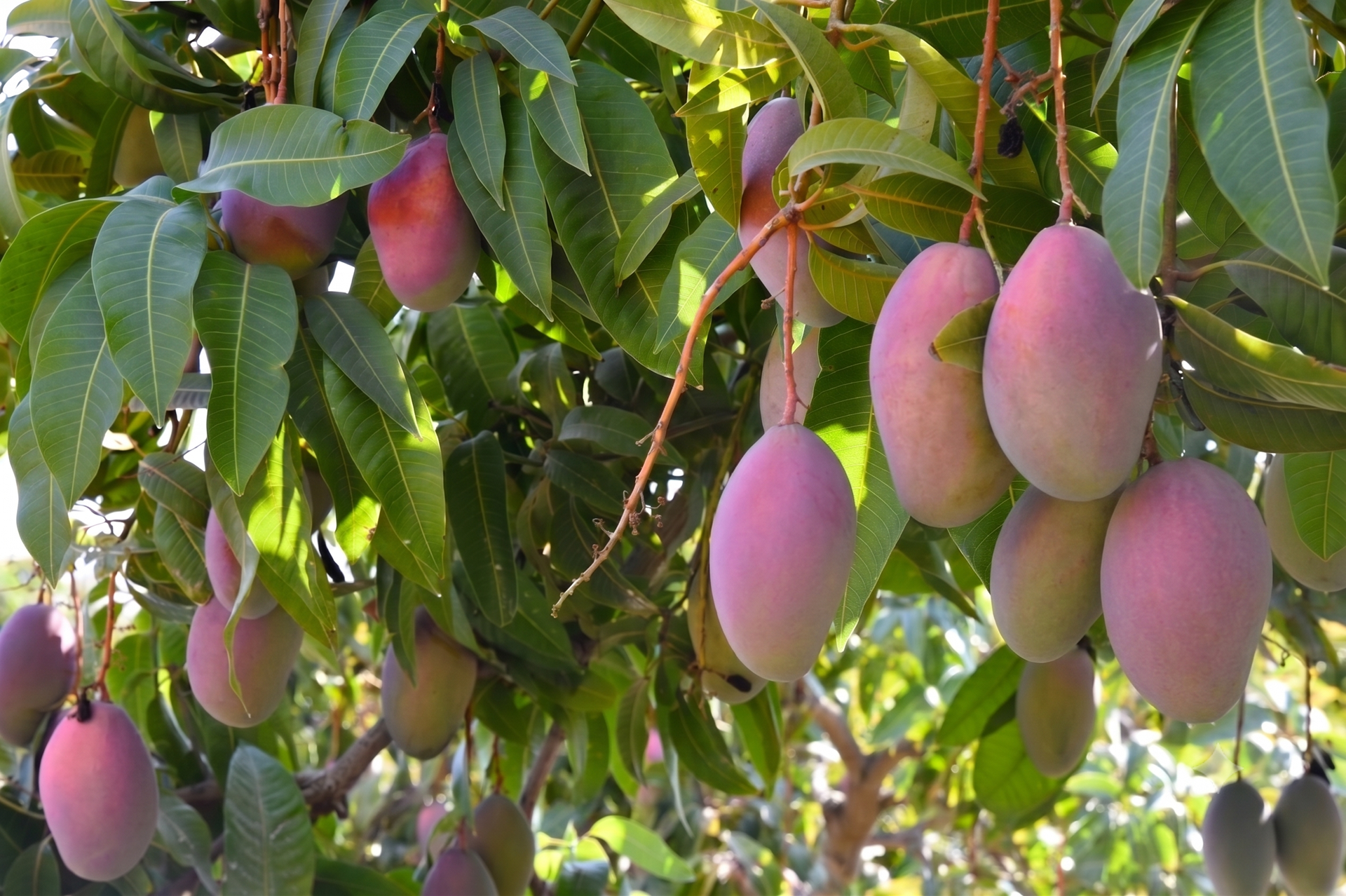
Mangoes have become one of the most representative crops of the Axarquía region of Málaga. The area’s subtropical microclimate, proximity to the sea, and expertise in growing and managing this fruit tree create ideal conditions for its development.
But its identity does not depend solely on the environment. It is also shaped by agronomic planning, knowledge of each farm, and the care applied throughout the entire production cycle.
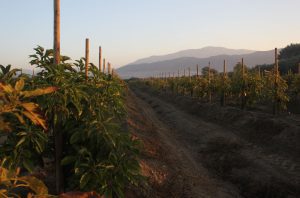
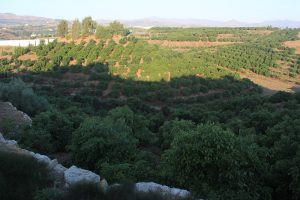
The orientation of the plot, its altitude, sun exposure, protection from the wind, and water availability can create significant differences between neighbouring farms. This is why crop monitoring must be adapted to the specific characteristics of each plot of land.
Other factors include the variety grown, the tree’s fruit load, fertilisation, irrigation, pruning, and plant health management. Achieving the right balance between all these factors promotes uniform ripening and fruit with the desired characteristics in terms of size, firmness, flavour, and texture.
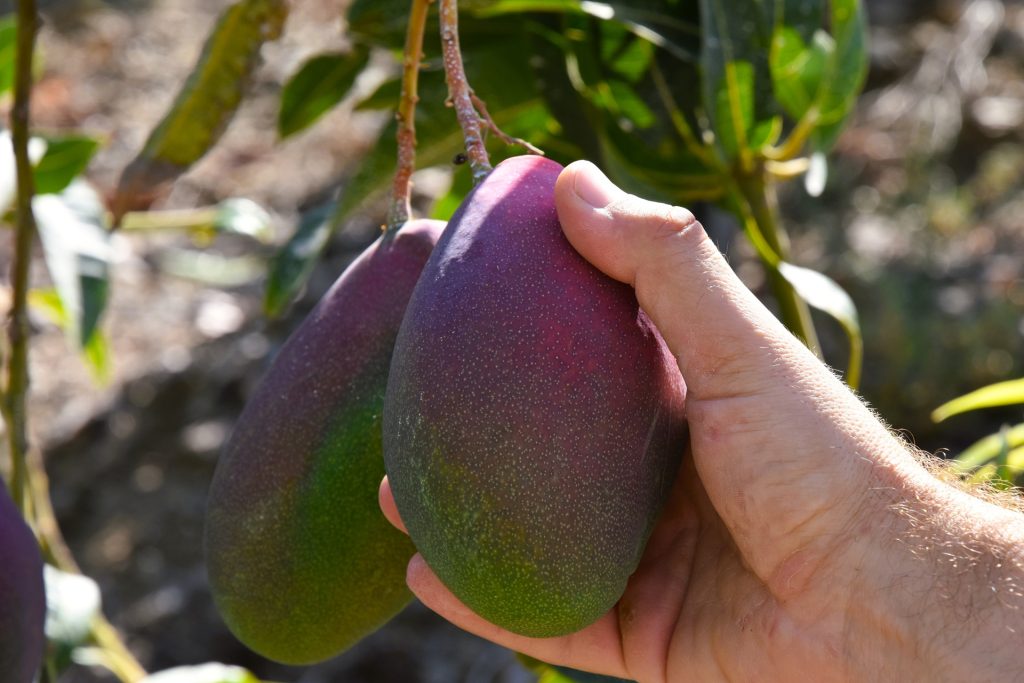
The timing of the harvest is equally crucial. A mango picked too early may not fully develop its aroma and sweetness, while harvesting too late can reduce its shelf life.
One of the major advantages of Axarquía mangoes is their proximity to Spanish and European markets. This proximity shortens transport times and allows the fruit to be harvested at a more advanced stage of ripeness than mangoes coming from more distant origins.
In this way, proximity directly influences the consumer’s final experience and becomes one of the distinguishing features of mangoes grown in the region.
Salsa Agrícola’s commitment to local production
At Salsa Agrícola, we manage farms on the eastern coast of Málaga, combining experience, knowledge of the land, and technical planning tailored to the needs of each crop.
Our work begins with the soil and continues throughout every stage of the production process. Monitoring our farms, managing resources efficiently, and coordinating our teams enable us to make decisions aimed at protecting both product quality and the environment in which our crops are grown.
Axarquía mangoes reflect this approach to agriculture: their identity stems from the combination of specific natural conditions and the work carried out throughout the entire crop cycle.
Producing locally means reducing distances, strengthening traceability, and offering products with a recognisable identity. But it also means contributing knowledge, expertise, and value to local agriculture.