

Avocado flowering involves a series of key factors for successful pollination, forming part of a complex agricultural process in which every detail influences the final outcome.
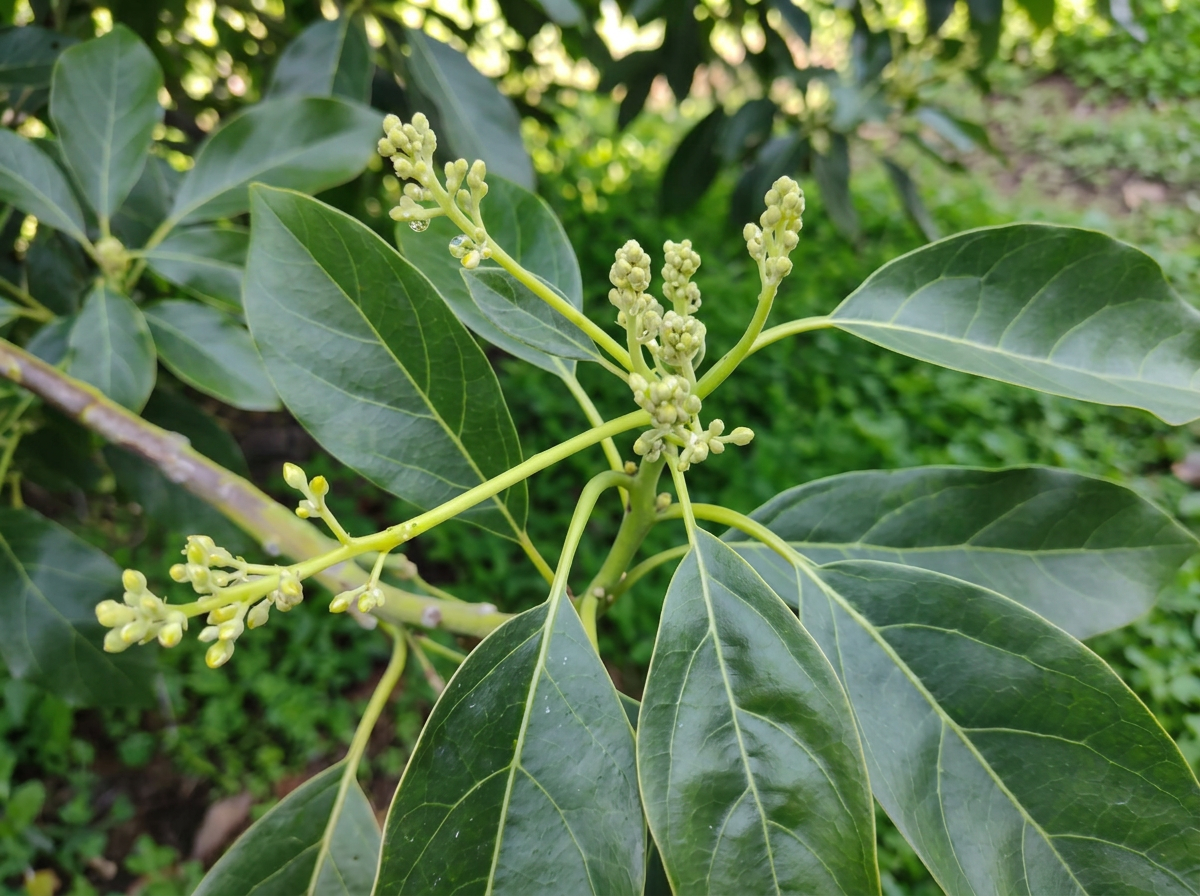
Avocado flowering is a fundamental stage in the production cycle of this crop, and its proper development directly determines fruit set. At Salsa Agrícola, this process is managed by taking into account the specific behavior of the flower and the factors involved in pollination.
The avocado flower is hermaphroditic and follows a system known as protogynous dichogamy. This means that each flower opens twice: first as female and later as male. This mechanism prevents self-pollination and promotes genetic variability. In practice, this means that coordination between flowers and trees is essential for pollination to occur.
There are two types of flowering behavior. Type A varieties, such as Hass, open as female in the morning of the first day and reopen as male in the afternoon of the following day. Type B varieties, such as Bacon, Fuerte, or Zutano, open as female in the afternoon of the first day and as male the following morning. Each opening lasts only between 3 and 4 hours, making synchronization crucial.
At Salsa Agrícola, successful avocado pollination depends on the interaction between these two flowering types. For fruit set to occur, pollen from a Type B tree must reach the stigma of a Type A flower while it is in its female phase. For this reason, the technical recommendation is to maintain between 7% and 10% of Type B trees within the orchards, strategically distributed to facilitate pollination through wind and insects.
The flowering process usually lasts between 4 and 8 weeks. During this period, a mature tree can produce up to one million flowers, although only around 0.1% will eventually become avocados. The remaining flowers naturally drop, highlighting the importance of optimizing pollination conditions.
Regarding pollinators, honeybees play the main role in Spain, since the original pollinators from Mesoamerica are not present. For this reason, Salsa Agrícola places between 5 and 10 beehives per hectare during flowering, while also testing alternative pollinators.
Finally, climatic factors directly influence flowering success. Optimal conditions include daytime temperatures between 20°C and 25°C, nighttime temperatures between 10°C and 15°C, relative humidity between 70% and 80%, moderate winds below 15 km/h, and full sun exposure. Conditions outside these ranges may negatively affect flower development or fertilization.
Ultimately, avocado flowering and successful pollination at Salsa Agrícola is a precise process in which plant biology, agronomic planning, and environmental conditions must align to ensure efficient production.