

The traditional and intensive avocado farming methods are two models used in agriculture, each with unique characteristics. Salsa Agrícola provides a detailed insight into the differences between both approaches, facilitating the understanding of their particularities and applications in the current agricultural context.
We analyze everything from planting density to operational costs, highlighting the advantages of each model.
Planting Density and Design in Traditional and Intensive Avocado Farming
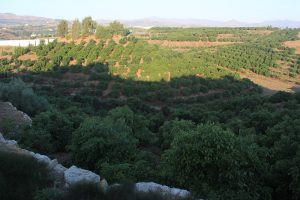
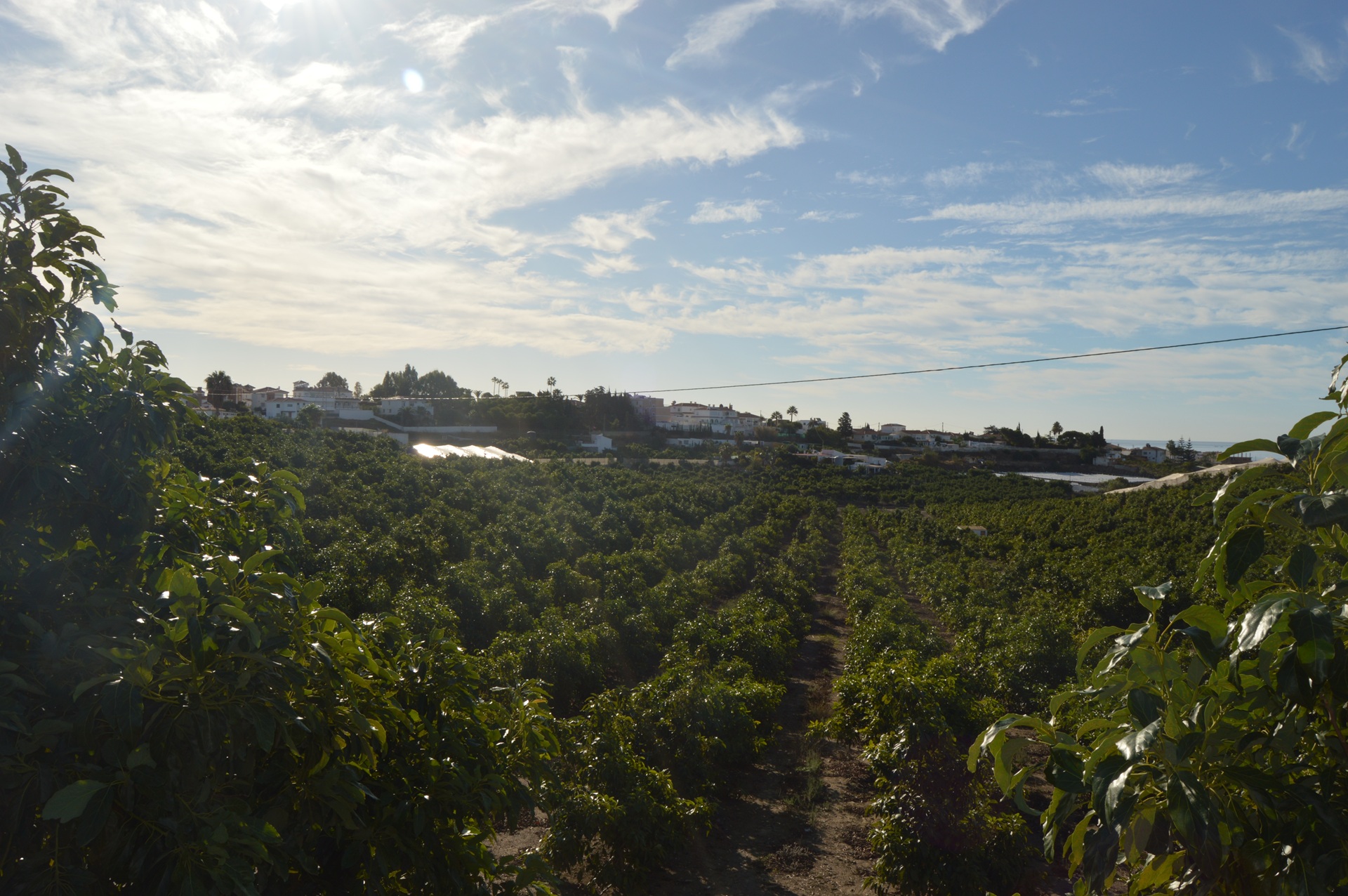
In traditional avocado farming, with a planting density of 200 to 250 trees per hectare (with 8x5m or 8x6m spacing), the aim is to develop a broad canopy for the tree. This model, which has been the historical standard in the Axarquía, allows the tree to grow naturally, promoting sustainable production over time.
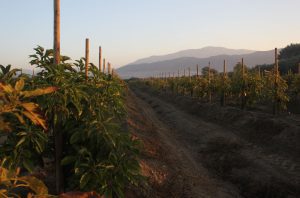
On the other hand, intensive avocado farming, an increasingly widespread model applied in part of Salsa Agrícola’s plantations, is characterized by a higher planting density (666 trees per hectare with 5x3m spacing). This model focuses on maximizing the efficient canopy volume per hectare, enabling faster production and a higher volume of fruit, thus optimizing profitability.
Light Management and Pruning in Traditional and Intensive Avocado Farming
Regarding pruning and light management, traditional farming typically requires formative and maintenance pruning, but over time, there may be mutual shading, making harvesting more difficult. Salsa Agrícola, in its intensive approach, performs annual technical pruning to ensure light reaches all productive branches, optimizing the harvest and preventing uncontrolled tree growth.
Salsa Agrícola’s intensive system ensures that trees maintain a controlled height, facilitating both light penetration and the harvesting process.
Productivity and Time to Production: Key Differences
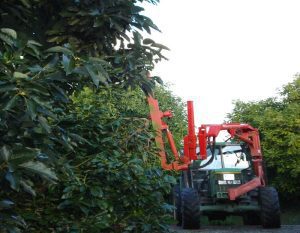
Productivity and time to production are some of the main differences between traditional and intensive avocado farming. While the traditional model has a more gradual entry into production, with average yields of 10,000 to 12,000 kg per hectare and a harvest requiring about 20% use of lift equipment, the intensive model shortens these timelines, reaching production levels of 12,000 to 15,000 kg per hectare, allowing for fully manual or pole-assisted harvesting, thus improving operational efficiency.
In Salsa Agrícola, the balanced presence of both systems in its plantations allows for combining the advantages of each model, integrating the stability and structural development of the traditional system with the productive and operational optimization of the intensive system. This dual approach provides a deep understanding of both approaches and more efficient management tailored to each farm’s characteristics.
Resource Use in Traditional and Intensive Avocado Farming
Both traditional and intensive farming methods use drip irrigation systems and sensors that optimize the use of water resources and nutrients. Salsa Agrícola, in its commitment to sustainability, applies these methods to ensure efficient water use and avoid waste.
Operational Costs: A Comparison of Methods
Finally, operational costs are key. In traditional farming, harvesting and pruning are more expensive due to the height of the trees. However, in intensive farming, the shorter trees significantly reduce harvesting costs, making this model more profitable in the long term. Salsa Agrícola focuses on maximizing operational efficiency, which is reflected in reduced costs associated with harvesting and maintenance.